News
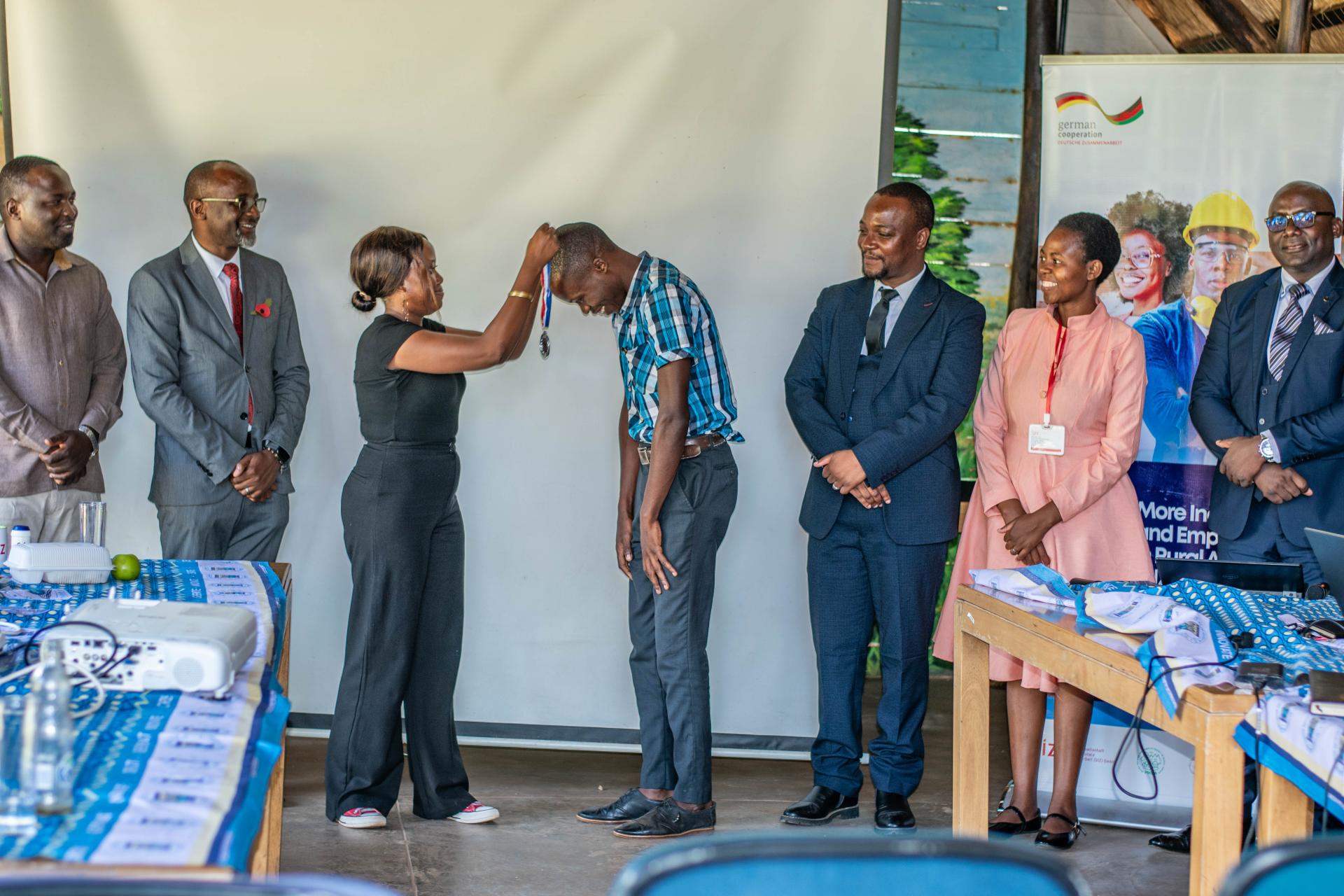
On Friday, 6 November 2026, 20 incubates took part in the MIERA III Cohort 2 pitching competition held at the Deutsche Gesellschaft für Internationale Zusammenarbeit (GIZ) offices in Lilongwe, where they presented their business ideas to a panel of assessors. Following the presentations, 10 business ideas were selected for further support.
The German Development Cooperation funded project implemented by GIZ in partnership with MUBAS, MIERA III seeks to improve income-generating opportunities in rural communities by supporting the development and growth of sustainable, locally driven small and medium enterprises owned by women and young people.
Among the 20 entrepreneurs who presented their business proposals, Arason Redison of Hardline Welding and Fabrication from Mchinji emerged as the overall winner, taking home the gold medal.
For Redison, the recognition represents an opportunity to take his business beyond its current operations and create a lasting impact in his community. His enterprise specialises in manufacturing window and door frames, steel beds and sofa sets.
Sharing his excitement following the announcement, Redson said he will use his business as a platform to equip local young people with practical welding and fabrication skills, giving them opportunities to become productive and self-reliant.
He also highlighted his commitment to adopting clean and sustainable environmental practices in his business operations, demonstrating how local manufacturing enterprises can contribute to both economic development and responsible resource use.
Speaking at the event, Acting Head of Research and Innovation at MUBAS, Dr. Martin Msendema, expressed satisfaction with the continued collaboration between GIZ and the University's Business Incubation Centre, noting that the initiative has progressed into its third phase from its initial outreach activities, with a stronger focus on supporting entrepreneurs through grants.
Dr. Msendema said the programme's interventions are aligned with the aspirations of Malawi 2063 and broader sustainable development priorities, particularly in addressing poverty, expanding employment opportunities and promoting environmental sustainability.
"MUBAS provides training to empower entrepreneurs with skills to sustain the environment and reduce poverty by creating jobs for youth and surrounding communities," he said.
He further emphasised that the University is committed to ensuring that opportunities for economic participation are accessible to everyone, regardless of their background or where they operate.
"We aim to ensure equal economic opportunities for everyone, whether they are in universities, public institutions or local communities," Msendema added.
His remarks reflect MUBAS' broader commitment to using knowledge, innovation and practical skills development to address societal challenges. Through initiatives such as MIERA III, the University is extending its impact beyond the academic environment by nurturing entrepreneurs who can turn local ideas and available resources into viable businesses that improve livelihoods and create employment.
Team Leader for MIERA III, Iris Cordelia Rotzol, highlighted the importance of the pitching competition in identifying and nurturing enterprises capable of sustaining themselves while creating meaningful employment opportunities.
She said the programme seeks to promote businesses that can generate income and employment for men, women and young people, ultimately contributing to national wealth creation.
Rotzol also underscored the value of the partnership with MUBAS, particularly in delivering training in sustainable building practices, climate-resilient infrastructure and gender integration.
“The emphasis on sustainable construction and environmentally conscious enterprise development is particularly important as rural communities seek practical solutions to infrastructure challenges while responding to the effects of climate change. By equipping entrepreneurs with relevant skills, the programme is helping to create businesses that are not only economically viable but also mindful of their environmental and social responsibilities,” she said.
For MUBAS, the initiative is another demonstration of the University's commitment to practical, community-centred innovation and strategic partnerships that connect academic expertise with the needs of society. By working with development partners such as GIZ, the University continues to create pathways for entrepreneurship, strengthen local industries and promote inclusive economic opportunities.
Similar Posts




Latest News
All news