News
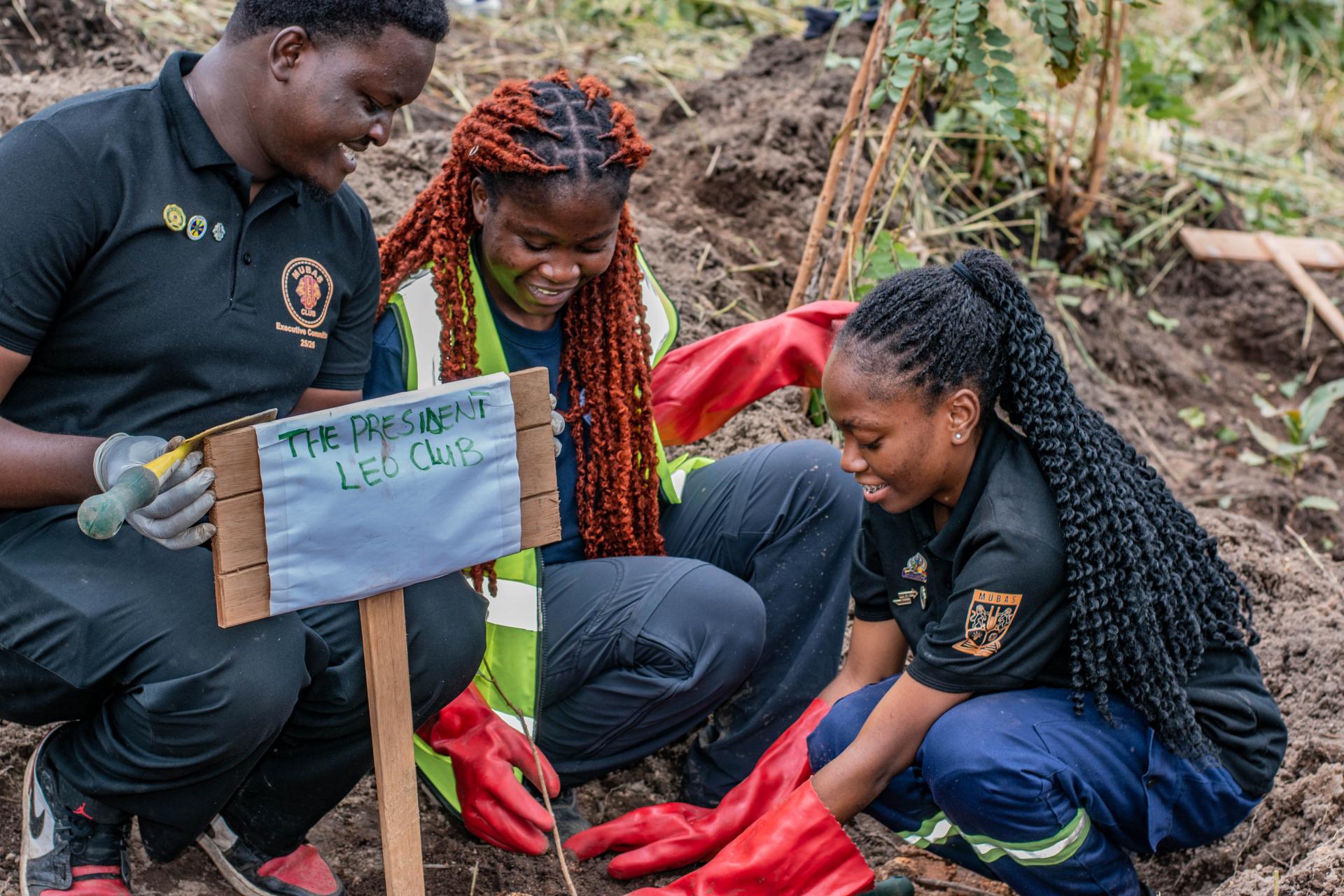
The initiative which was led by the Leadership, Experience and Opportunities (LEO) Club in collaboration with the Student Representative Council (SRC), brought together many students from the university, reflecting their collective effort to contributing to environmental sustainability.
During the exercise, the students planted 600 trees which were donated by Mamaland Institution, a branch under Mota-Engil Construction Company.
As one of MUBAS’ strategic pillars under industry engagement and community outreach, the institution continues to encourage students to initiate programs that give back to society. The tree planting demonstrates how student-led initiatives can assist in promoting sustainability and community development.
Many students were excited to take part in the exercise, saying as students, they have a duty to give back to the community and contribute to environmental conservation.
“In todays’ world, there is a lot of deforestation happening at an alarming rate, so we need to keep planting the trees to replace those that have been cut down, and this exercise also allowed to relax in this natural environment, far away from the rigours of academic life” said Shantel Masiyano, President of the LEO Club.
Speaking during the event, the Director of Students Affairs (DOSA), Dr. Getrude Sitolo, emphasized the importance of citizen participation in environmental conservation efforts.
“As the nation engages in the exercise of planting more trees, it is very important that all citizens take part in the initiative so that we can beautify our country,” she said.
She encouraged the wider community to actively participate in such initiatives, noting that collective action can help reduce exposure to natural disasters and other environmental challenges. Dr. Sitolo expresses gratitude to Mamaland Institution for the support and called for more collaboration between the two institutions.
Similar Posts



Latest News
All news