
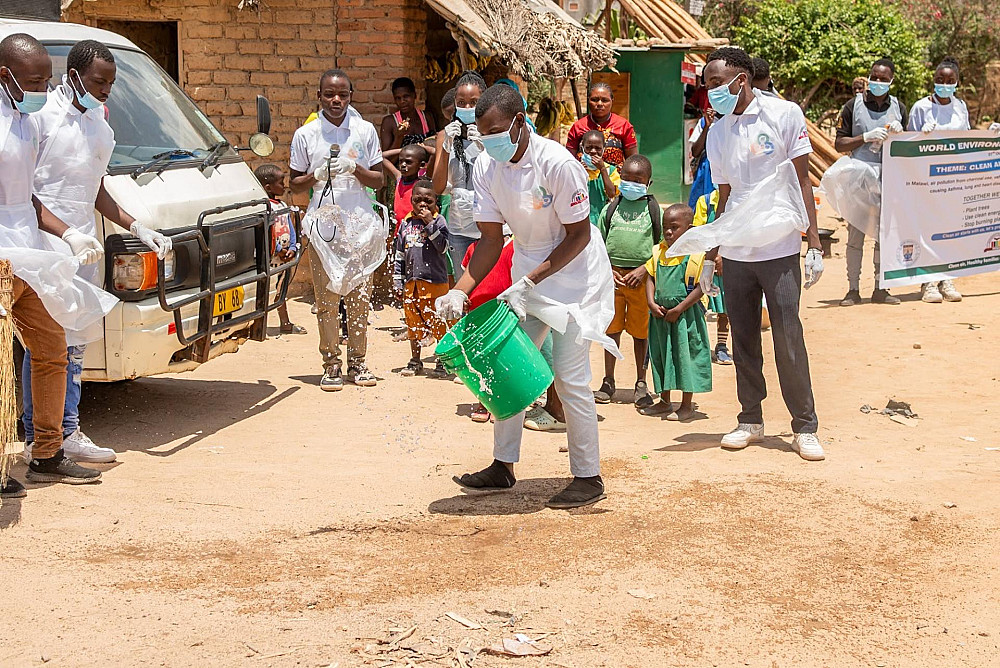
Members of the Malawi Environmental Health Society at MUBAS, in collaboration with the Malawi Environmental Health Association (MEHA), visited Makata in Ndirande, Blantyre, where they conducted community sensitization activities aimed at raising awareness about air pollution and its impact on human health.
The initiative brought together Environmental Health students who engaged community members through discussions, demonstrations, and interactive learning sessions. The students educated residents on the causes and effects of both indoor and outdoor air pollution and highlighted practical measures that households can adopt to reduce exposure to harmful pollutants.
One of the key messages focused on the health risks associated with the use of solid fuels such as firewood for cooking. Community members were encouraged to improve ventilation in their homes and adopt practices that reduce smoke exposure, particularly for women and children who are most affected by indoor air pollution.
Treasurer of the Malawi Environmental Health Society, Jane Kaonga, emphasized that clean air is fundamental to a healthy population. She noted that increasing public awareness about air pollution is essential in preventing respiratory diseases and improving overall well-being.
The outreach also highlighted the connection between environmental protection and public health. According to MEHA Publicity Secretary, Kondwani Luwe, the commemoration serves as a platform to amplify the importance of safeguarding the environment as a means of promoting healthier communities.
The initiative directly contributes to Sustainable Development Goal (SDG) 3: Good Health and Well-being, which seeks to ensure healthy lives and promote well-being for all at all ages. By educating communities on air pollution prevention, the students are helping to reduce the risk of respiratory illnesses such as asthma, chronic respiratory infections, and lung cancer.
Beyond sharing knowledge, the activity empowered community members to take responsibility for protecting their health and environment through simple but impactful actions. The engagement demonstrated how university students can play a vital role in addressing public health challenges while contributing to sustainable development.
For the participating students, the experience was both educational and inspiring. It reinforced the understanding that achieving healthier communities requires collective action, continuous awareness, and a commitment to environmental stewardship. Through initiatives such as this, MUBAS students are helping to create a future where clean air supports healthier lives and stronger communities.